2020年6月23日 星期二

Wineshark HK Restaurant Review - God of Sushi 寿司の神


This sushi restaurant is located in Yuen Long, with the chef admiring very much the famous sushi chef in Japan, Saito san, and naming his restaurant after him. Arriving on this Saturday evening, we were seated at the counter, overlooking how the chef prepared the different ingredients.


The restaurant is pretty small, with a counter seating 9-10 people while there are also a few tables too. The decor is no-frill and simple, having a family neighborhood atmosphere, and the chef shared with us that he also grew up in Yuen Long.


We ordered the Omakase Menu ($1,280 each), along with a bottle of sake 齊藤酒造 英勲 古都千年 純米大吟醸 ($360 half bottle). This sake came from Kyoto and for me was not sufficiently fresh for my liking unfortunately.


The starter was a pickled dish, with Tiger Prawn and yellowish Herring Roes, with some Okinawa seaweed Umibudo (or sea grapes). The prawns have a great firm texture, showing how fresh they are, with the herring roes adding a bit of savory to the dish. The sea grapes got a crunchy texture which with the vinaigrette sauce is really appetizing.


There are a total of five sashimi, with the first being the Hokkaido Scallops. The huge scallop got a great soft texture, and even after cutting in half it was still a big piece. The chef had added some yuzu juice and peel shavings to enhance the fragrance and bring out further freshness. A great one.


Next was Buri, with the chef using two parts of the belly of the fish to prepare this dish. He used the torch-gun to slightly burn the middle portion (the lighter color one) to liven up the fish oil and enhance the taste of the fish. And for the other portion (the darker one) coming from near the tail of the belly part it was richer in the taste of the fish. Another good dish.


The third was Oyster, and this one was the award-winning Konagai Kaki from Nagasaki Prefecture. The oyster was fresh, opened before us, and after cleaning it thoroughly the chef put it back in the shell and added some chives and radish. The oyster was very creamy in texture, with a rich flavor that last long in the mouth. I also like the oyster having an appropriate size.


The fourth was the Crab of the season. This type of crab, according to the chef, is similar to the flowery crab. After cooking it and taken out the meat, the chef also mixed them with the crab yolk and an abundance of the crab roes. So when we tasted it there was a slight crunchy texture from the popping of the roes.


The last of the sashimi was something common yet special. I bet most people had tried the grilled cod and in many instances quite appalled by the oiliness from the piece of grilled fish. This Cod however, while retaining that rich taste, did not have such strong sense of oily feeling. With the chives and some sesame to add to the taste profile it was a nice one worth trying out.


Going to the sushi now, there were a total of ten pieces, with a trio of three sea urchin included. The first sushi was Kanpachi, or Greater Amberjack, with a nice crunchy texture. I also found the sushi rice very good, with the right temperature, softness and stickiness, bringing my expectation for the remaining sushi even higher.


The second sushi was Kinmedai, or Splendid Alfonso, the famous fish coming from Shizuoka area. The chef had torched the skin slightly to give a bit of char to liven up the fish oil and bring out extra intensity in aroma and flavors, while keeping the flesh raw to ensure the tender texture was retained. A good one.


The third sushi was Chu-Toro, or the fatty tuna belly. Instead of a single piece of the fish, the chef had deliberately cut them into three slices, so that the tendon of the fish would not be too chewy to swallow. The three thin slices of the toro was cleverly put together, and this was the first time I saw how a chef did this and I thought it was a smart way. For those who were traditionalilst this might be showing the ingredient was not of the best cut, but to me it served the purpose. 


The fourth sushi was Hokkigai or surf clam, with the chef using the technique of hitting it to loosen the muscle before forming the sushi to serve. The clam was crunchy on texture, really fresh and on the bite it was just like immersing oneself in the sea to enjoy the delicacy. Another very good piece.


The fifth sushi was the first in a row of three of sea urchin. The Bafun Uni from Hokkaido was good, bright orange in color, though having a slightly bitter taste on the mouth. The chef had used the gunkan roll to prepare this sushi, and while it is not bad, comparing with the other two uni sushi coming up this one was much inferior for my liking.


The sixth sushi was the second sea urchin type, Purple Sea Urchin. This one the chef did not use the seaweed to wrap the sushi, and choosing to just put on the sushi rice and served to our hands. This one did have a richer taste of the sea urchin than the previous one, and also a more creamy texture. My favorite among the three.


The seventh sushi and the last of the sea urchin was White Sea Urchin. This one was the sweetest among the three, and I could understand why the chef had sequenced them in such order. Probably the softest also among the three, it was not easy to make the sushi stand and I could imagine how it would fall apart if trying to eat with chopsticks. In my opinion the taste was not as rich as the Purple Sea Urchin despite its sweeter taste so I still prefer the last one.


The eighth sushi was another piece of the tuna belly, but this one was Otoro, the most prized portion of the belly with a higher fatty content, and giving a rich, intense flavors. The flesh was so soft and tender that it was essentially melting in the mouth, and I like that it was not overly fatty to make it unbearable. A very good one.


The ninth sushi was Shima-Aji, or Yellowtail. The chef had first put the fish meat in a special sauce to marinate for a short period, then taken out those to prepare this sushi. The flesh got a great texture, with a firm bite and also rich in taste, further exemplified by the soy sauce used to marinate. A good example of how the common ingredient could turn into something memorable. 


The last piece of sushi served was a bit theatrical. Before the Buri was served, the chef had used a special device to cover the dish and then burning an applewood incense to create the smoke and infuse the container, so that the buri flesh got smoked and imparted a nice cedar note. The chef also put another piece of the fish on top, with this one torched to provide the fish oil to double concentrate the taste and experience. I like the creativity and new idea the chef had brought into the menu.


Finishing the meal there was a bowl of Miso Soup, and this one was of special recipe, created from onion, with the chef first cooking the onion before blending them to form a nice creamy texture. On the taste it was also gorgeous, apparently with a lot of seafood added to the broth to create a sweet and umami soup that was warming and fulfilling, a good wrap up for our dinner.


For dessert we had a slice of Melon, with the chef asking us to first tasted a piece before he sprayed the melon with something and asked us to try again. It turned out the melon tasted even sweeter than before after the spray, and when we asked what was that, the chef told us it was a Japanese whisky, which was a surprising great match with the sweetness of the melon.

Although the atmosphere was not exactly one I would recommend, the food in general were good. The service was nice with the staff very attentive and friendly, but the chef was perhaps a bit shy and did not strike up a lot of conversations despite we were just sitting in front. But he did explain to us each of the ingredients worked.

The bill was $3,212 and considering the overall expeirence, the price tag was very reasonable. I had heard about Yuen Long had become a hub for good Japanese food and I thought I found one matching that slogan.

2020年6月20日 星期六

Wineshark Cooking Class - Stir-fried Lotus Root with Chinese Celery 泮水芹香

Ingredients (for 4):

  • Elm fungus - 35 g
  • Yellow ear - 30 g
  • Dried lotus seeds - 20 g
  • Ginger - 15 g
  • Chinese yellow wine - 1 tsp
  • Oil - 2 tbsp
  • Water - 1/2 cup + 1/4 cup + 1/4 cup 
  • Mushroom extract - 1/2 tsp + 1/4 tsp
  • Lotus roots - 1 section
  • Chinese yam - 1/2 large sticks
  • Sweet peas - 10 pieces
  • Chinese celery - 4 sticks
  • Lily bulbs - 2 pieces
  • Red and yellow bell pepper - 1 each
  • Salt - 1/2 tsp
  • Sugar - 1/2 tsp
  • Sesame oil - 1/2 tsp
Procedures:

1. Soak the dried lotus seeds in water.

2. Once softened, boil the lotus seeds in water for 5-7 minutes until soft but uncooked.

3. Peel the lotus roots and cut into halves on the long side. Then cut into slices of about 3 mm. Put in water to avoid turning brown.

4. Soak the elm fungus in water.

5. Boil the elm fungus in hot water for 10 minutes. Then remove and cut into small pieces about size of a coin.

6. Soak the yellow ear in water.

7. Boil the yellow ear in hot water for 10 minutes. Then remove and cut into small pieces about size of a coin.

8. Cut the red and yellow bell peppers into small pieces.

9. Remove the fiber of the sweet peas, then cut into halves.

10. Peel the lily bulbs and get the white petals.

11. Peel the Chinese yam and cut into small pieces. Put in water to avoid getting brown.

12. Cut the Chinese celery into sections about 6 cm long after removing the tough fibers.

13. Heat the wok on medium high heat, and then add 2 tbsp of oil and add the ginger slices.

14. Add the elm fungus to stir-fry. Then sprinkle with Chinese yellow wine and continue to stir-fry.

15. Add 1/2 cup of water and 1/2 tsp of mushroom extract, and then add the yellow ear to let it simmer.

16. Add the lotus seeds, lotus roots, sweet peas, and Chinese yam to continue to stir-fry. 

17. Add the bell peppers and Chinese celery to continue to stir-fry. 

18. Add the lily bulbs and then add 1/4 cup of water, along with 1/4 tsp of mushroom extract, plus sugar and salt. 

19. Add some sesame oil to wrap up.


Wineshark Cooking Class - Stir-fried Wagyu Beef Cubes with Garlic Slices 蒜片爆炒和牛粒

Ingredients (for 4):

  • Wagyu beef - 300 g
  • Black pepper finely - 3/4 tsp
  • Sea salt - 1/4 tsp
  • Soy sauce - 2 tsp
  • Corn starch - 1/4 tsp
  • Sesame oil - 1 tsp
  • Garlic - 4 cloves
  • Oil - 1 tbsp
  • Kale - 1000 g
  • Oil - 2 tbsp
  • Salt - 1/2 tsp
  • Ginger juice - 2 tsp
  • Chinese yellow wine - 2 tsp
  • Water - 1/4 cup
  • Sugar - 1 tsp
Procedures:

1. Cut the beef into strips and then cut into cubes of about 2.5 cm in size.

2. Cut the garlic into slices.

3. Trim the kale to remove the hard fibers, the leaves and the flowers, and cut into equal length.

4. Marinate the beef cubes with black pepper finely and salt. Then add soy sauce, corn starch and sesame oil.

5. Heat the wok on high heat, add 2 tbsp of oil and 1/2 tsp of salt, then add the kale to stir-fry.

6. Add the ginger juice and continue to stir-fry. Then add the Chinese yellow wine and sugar, plus 1/4 cup of water. Continue to stir-fry.

7. Remove the kale and put on the plate.

8. Heat the wok on medium heat, add 1 tbsp of oil and then add the garlic slices, continue to stir-fry until slight golden, then remove and put on kitchen paper to absorb the excess oil.

9. Heat the wok with the oil remaining on medium heat, add the beef cubes to pan-fry on one side.

10. When it is charred, flip the cubes to the other side to continue to pan-fry.

11. Sprinkle with Chinese yellow wine and continue to stir-fry. 

12. Add the garlic slices and stir well before serving.

2020年6月19日 星期五

Wineshark HK Restaurant Review - Fu Ho Restaurant 富豪酒家


This Michelin 1-star restaurant is famous for the abalone, with founder and owner Mr. Yung working in the culinary industry for more than 30 years, building a reputation in particular on the abalone he made. The restaurant has been awarded the Michelin status since 2011, now in the 10th year in a row.


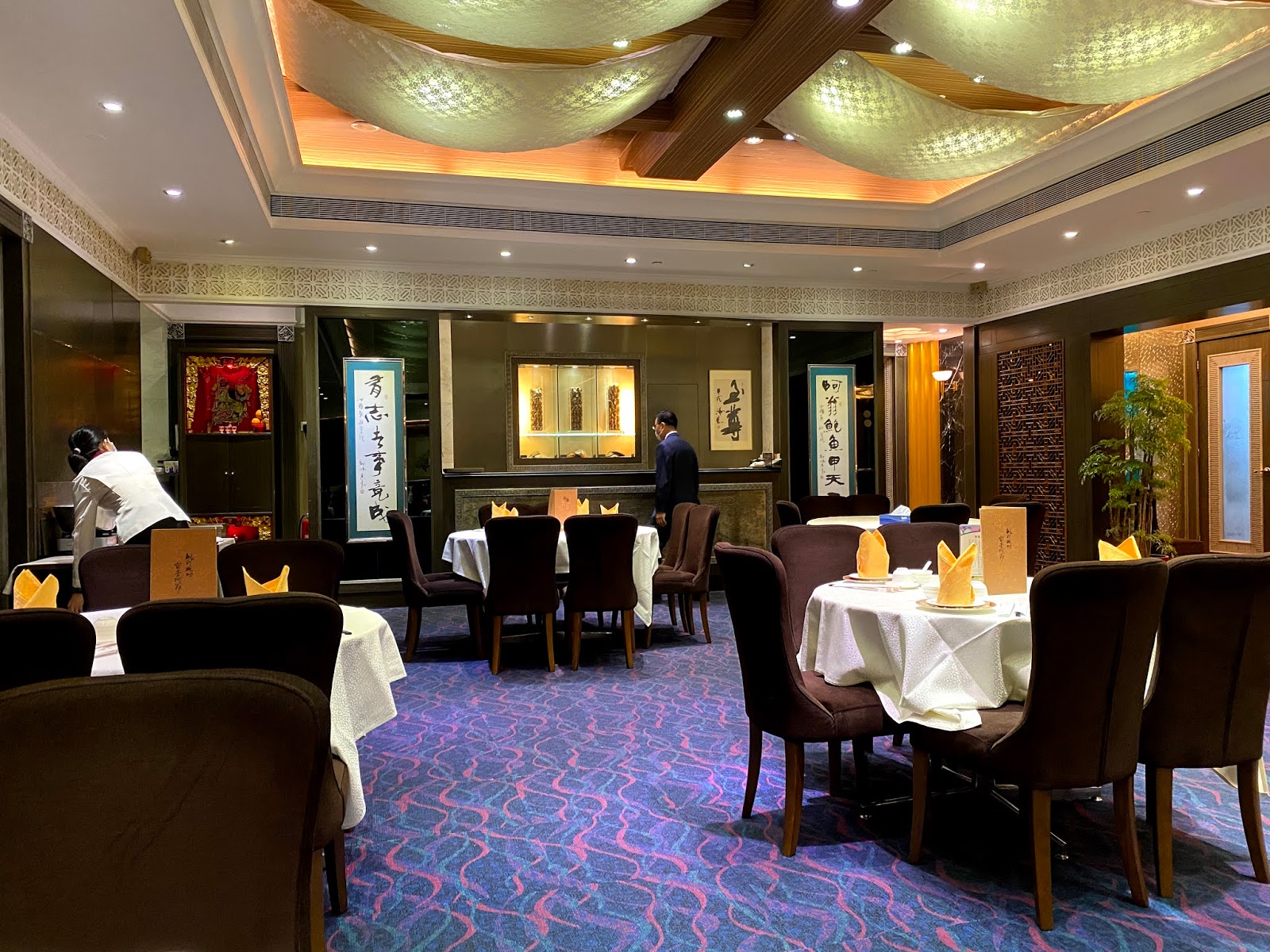
Located in TST Mira Place, the golden shiny entrance immediately gave a sense of luxury, matching with the name of the restaurant, meaning super rich people. We were greeted warmly before seated, with the general environment one of comfort in a more traditional Chinese restaurant setting.


We ordered the limited 20th anniversary menu ($3880 each), featuring the rare 6-head Amidori dried abalone. The first course is Ah Yung Style Stir-Fried Fish Maw in Clay Pot, 阿翁砂鍋炒花膠. The stir-frying was done at the dining area, but it was a bit far from where we sit to see. The fish maw were cut to a smaller size to allow easy scooping up and eating, tender and nutritious. There were also egg, shreds of really nice Chinese ham and crab yolk stir-frying together with the fish maw. There was also a bowl of supreme broth served together, so that when eating each bite one can drink a spoon of the broth which added an intense and amazing feast of flavors. A really great dish to start.


Next was the highlight of the menu. Braised 6-Head Amidori Dried Abalone with Chinese Lettuce Heart, 6頭日本千葉網鮑配唐生菜膽. This for sure was the largest dried abalone I have seen and eaten so far. I could not imagine how long the chef would need to braise the abalone, but when I cut it up with the knife it was so soft and easy. Also, the cut abalone did stuck to the knife too, as the best dried abalone would, further testimony to the quality of the abalone and the great techniques the chef in cooking. The sauce was simply fantastic, and paired with the lettuce I could barely hold myself from licking the dish to savor every single drop of the essence. A really rewarding experience on trying out such a premium dish, and when Mrs. Yung came to talk to us, she shared that if ordering just this abalone alone the price was higher than the full menu, but because of this special promotional menu they were offering this as a token of appreciation to the customers.


Then it came Garoupa Rolls in Two Ways, 翡翠金銀海斑卷. The fish fillet is thinly sliced, then wrapped with a few shreds of Chinese ham and shiitake mushroom, before cooking it in two ways, one deep-fried to give the golden sheen, and the other stir-fried to maintain the white color. Both were equally tasty, with the fish seasoned well and one can taste the freshness, with the ham and shiitake mushroom bringing further complexity on savory and fragrance to the fish and complement. I also like the deep-fried version, having a slight crispy outside but not too much of corn starch to make a heavy coating. With a broccoli on the side too, it is both visually and flavor-wise a great dish.


When we ordered the menu, the staff told us that they would like to treat us for a chicken or pigeon dish. Not sure what that is, I opted for chicken. And I was surprised to see a Crispy Skin Fried Chicken served next. I thought it would be one or two pieces but not half the chicken. The chicken was tender and juicy, with the skin very crispy and not having any fat underneath. The only thing I would like them to work on was the seasoning of the chicken. I found it was uneven, with some parts of the chicken a bit too salty, while some other parts not sufficient. Addressing that will certainly make this dish even more amazing.


By now we were very full, and next came the Fu Ho Fried Rice in Fujian Style, 富豪福建炒飯. Originally fearing that I could not finish it, but it turned out I was just over-worried. The fried rice was so tasty I even wanted to have more! Instead of the traditional Fujian Fried rice style where the sauce tended to make the rice soggy, this one got the same nice flavors, with plenty of shiitake mushroom, BBQ pork, roasted duck, shrimp, spring onion as ingredients, the fried rice was not soggy and each remained distinct but not too dried as most fried rice would be. A true integration of both style for their best features, another dish I would recommend to order.


For dessert, the first one was Double-Boiled Bird's Nest in Almond Juice, 原燉杏汁官燕. We were also given the choice of changing the almond juice to coconut milk or just plain rock sugar, which I did not choose but my wife opted for the plain rock sugar version. Thoughtfully the syrup was served separately, so allowing me to adjust the sweetness by myself, and the almond note was fragrant, with the bird's nest plentiful and another luxurious treat for ourselves in this wonderful meal.


The final course was Walnut Cookie and Coconut Milk Cake. The cookie was crunchy with appropriate sweetness and a nice walnut note, and the coconut milk cake creamy and refreshing. A nice finale to the meal.


But wait, we were asked whether we like Papaya. And then we were served half a papaya each. Another treat from the restaurant, we felt so contented with the fruit and that wrapped up our nice and luxurious dinner.

Throughout the meal the friendly staff was attentive but not intrusive. We also saw Mr. and Mrs. Yung sitting in the restaurant, helping to greet and talk to the customers. In the midst of our meal Mrs. Yung also came over to talk to us, and paying attention to address us by name, and checking in with us on the food and service, again demonstrated these owners really paying their utmost care to the business. Mrs. Yung shared with us that the restaurant would be renovating soon, and I look forward to returning after that to experience their new look.

The bill on the night was $8,635 which might seem extravagant. However, considering the market price for the 6-head abalone alone it was very reasonable. And I would like to come again to try out some of their other dishes in near future.