2013年2月8日 星期五

Chateau Dauzac


A fifth growth in Margaux, Chateau Dauzac has been undergoing a renaissance since 1992, under the management of Andre Lurton. The estate has a long history and was in existence since the 13th century, but without any viticulture then.

In the 18th century it was under Thomas Michael Lynch, who acquired the estate in 1740. Later it was sold to Nathanial Johnston, a shipping firm, which also purchased a share in Chateau Latour as well as Ducru-Beaucaillou.

One of the most important discoveries in the history of viticulture, the Bordeaux mixture was first experimented on the vines of Chateau Dauzac, by Professor Millardet and estate manager Ernest David, saving the whole industry from serious devastation caused by downy mildew.

After the wars the quality deteriorated, with several change of owners also. The turnaround started in 1966 when Alain Miailhe acquired the estate, who later sold to Felix Chatelier in 1978. Felix built a new chai, completely renovated the cellars and extensively replanted the vineyards, laying the foundation for improvement. Chatelier later sold the estate to Mutuelles d’Assurances des Instituteurs de France (MAIF) in 1988, which engaged the services of Andre Lurton as manager since 1992.

Today it covers 120 ha, of which 50 ha are planted with vines, having 5 ha outside Margaux, bottled as Chateau Labarde. It has a typically deep gravelly terroir. Planted mainly with Cabernet Sauvignon (58%) and Merlot (37%), there are some Cabernet Franc (5%) also. They are planted with a high density of 10,000 vines per ha, averaging 20 years in age.

Once harvested the bunches are destemmed and crushed, then fermented in temperature-controlled stainless steel tanks, with a patented cap-breaking system. The wine also will undergo malolactic fermentation, and then put into oak for one year before fining with egg white and bottled. The grand vin is Chateau Dauzac, with 23,000 cases, and a second wine known as La Bastide Dauzac.

2013年2月4日 星期一

Josmeyer


This winery was founded in 1854 by Aloyse Meyer, who decided to set up a negociant business in Alsace, but it was Aloyse’s grandson Hubert who created the brand Josmeyer by adding the first three letters of his father’s Christian name, Joseph, to the family name. Now the winery is in the hands of the fourth generation, Jean Meyer, son of Hubert.

Josmeyer is located in the village of Wintzenheim, west of Colmar, with 28 ha of vineyards, scattered across the nearby villages, mainly in Turckheim and Wintzenheim. There are 2 ha in Grand Cru Hengst and a small parcel in Grand Cru Brand, having different soil types.

Planted with the noble varieties, comprising of 28% Riesling, 21% Pinot Gris, 19% Gewurztraminer, they also grow a significant percentage of Pinot Blanc and Auxerrois (24%), and 10% Sylvaner, Muscat and Pinot Noir. The minimum planting density is 5200 vines per ha to ensure sufficient competition for quality vine.

Manually harvested, with no yeast, sugar or enzymes added in the whole fermentation process, the grapes are sorted and crushed in pneumatic press which allows the slow extraction of all aromatic subtleties of the grapes. The wine is then fermented in temperature controlled tanks, and then transfer to old wooden casks on their lees for ageing before release.

Jean also developed an artist series by having contemporary artists designing the labels of the wine. At the same time, the estate became totally organic and biodynamic in 2000.

2013年2月1日 星期五

Chateau Haut-Corbin


The property used to belong to Edward, Prince of Wales, during the time when the area was under English rule. But with time it was divided into different properties, sharing the name of Corbin. Chateau Haut-Corbin is located on the north of St-Emilion, very near to Pomerol, only 600m away.

There were not a lot of historical records which allowed a glimpse of its past, and an insurance company Mutuelles d’Assurances du Batiment et des Travaux Publics purchased the estate in 1986.
 
Totaling 6 ha, with sand on clay base at the top of the slope, the soil further down is comprised of more clay and gravel. Average vine age is 45-50 years, producing grapes with intense flavors. Green harvesting may be done if necessary during vigorous years.

Hand harvested, with sorting down to remove damaged and unripe bunches, a new cellar was constructed in 2007, with new vat room of 100 hl temperature controlled wooden tanks, allowing fermentation by parcel and variety. After fermentation the wine will macerate for 30 days for malolactic fermentation and then put into 55% new oak for 12-14 months.

2013年1月28日 星期一

Chateau Rauzan-Segla


The Rauzan estate was where the two chateaux of Rauzan-Segla and Rauzan-Gassies originated, which were both second growths of the 1855 classification, located in Margaux.

The estate was first acquired by Pierre des Mesures de Rauzan in 1661. Pierre was a powerful negociant, who had run Chateau Margaux and Chateau Latour, and his time spent with the first growths contributed to his decision to buy the estate later on. At his death in 1692, the estate was passed to his three sons, with the youngest taking over the title and the responsibility of the vineyards.

In 1763 the estate was divided between Jean-Baptiste de Rauzan and a nephew, Jean de Roulier, but the two estates continued to function as one. But when Catherine de Rauzan married to Baron de Segla, the split was complete, becoming the now Rauzan-Segla.

In the 1855 classification Rauzan-Segla was ranked much higher than Rauzan-Gassies, and actually it was ranked at the top of the second growths only behind Mouton. In 1903 it was acquired by Frederic Cruse, but without much investment in the cellar the quality deteriorated. Cruse did construct the current chateau but had to sell the estate in 1956.

The estate was later sold to a Liverpool firm John Holt in 1960, with the management turning to Eschenauer, aiming to turnaround the property. The high-yield and low quality Merlot was replanted with fresh swathes of Cabernet Sauvignon and with the appointment of Jacques Theo in 1983, the quality further improved with the replacement of the cellar master and the mouldy barrels with stainless steel equipment.

It was later acquired by Brent Walker in 1989, who in 1994 sold again to the Chanel group. The Wertheimer family of Chanel installed a new winemaking team, headed by John Kolasa, with more new equipment including sorting tables, field drains to prevent the flood at the vineyards, and renovation of the cellars and chateau.

The total vineyard size is 62ha, but the estate actually covers 75ha. Among that, 52ha has vine density increased from 6,000 vines per hectare to 10,000 vines. A purchase of an additional 10.5ha from nearby Alesme-Becker and Arsac contributed to the second wine, known as Segla and was introduced in 1995.

Cabernet Sauvignon now contributes 54%, with 41% Merlot, 1% Cabernet Franc, 4% Petit Verdot. The soil is typical gravel of the Medoc, and during the growing season leaf thinning and green harvesting is practiced. Now only manually harvested, the grapes would go through sorting at the reception, destemming and then another sorting.

Each plot is vinified separately, with the fruit being transferred by gravity to temperature-controlled stainless steel vats for fermentation. The wine will then go into barrel, about 50-60% new, for up to 20 months, with traditional racking undertaken every 3 months, before fining with egg white and bottled unfiltered.

The grand vin is Chateau Rauzan-Segla, typically producing 10-12,000 cases per year, with 55-68% Cabernet Sauvignon, 32-40% Merlot and minor contributions from Cabernet Franc and Petit Verdot.

With rigorous selection, only the best of the harvest goes into the grand vin, with the rest going to the second wine Segla, which has about 12,000 cases produced per year. In 1987, for example, no grand vin was produced because of the quality issue. The 2009 label was a commission by Karl Lagerfeld to commemorate the 350th anniversary of the original estate.

2013年1月26日 星期六

Chateau Latour-Martillac


The name of the estate was derived from an ancient tower which can still be seen, dating from the 12th century, in the courtyard at the front of the property. The earliest record as a vineyard was dated only to the 19th century, but the wines were not widely known or of great reputation then. It was not until the arrival of the Kressmanns, a family of German descent, that things began to change.

Edouard Kressmanns arrived in Bordeaux in the 1860s and set up wine trade, distributing the wines of Latour-Martillac by 1871. The family later took over the viticulture, first planting white varieties in 1884 and then launched Graves Monopole Dry in 1892, selling well throughout much of the early 20th century.

Edouard’s son Alfred later decided to purchase the estate in 1929 and owned it till now. Most of the 12 hectares vineyard was planted with white varieties then. The wine got a good reputation and was drunk at the coronation of George VI in 1937. Alfred’s son Jean took over control in 1955.

Although the white is more well-known, it was the red which was first classified in 1953. The white followed later at 1959. Jean then decided to purchase the adjacent land to increase the vineyard to 30 hectares, and there were more purchases in recent years.

Now the estate is under the management of the next generation, with brothers Tristan and Loic in the helm. They had been advised by Denis Dubourdieu in 1986 and Michel Rolland in 1989. Today the vineyard covers 46 hectares, with 36 hectares on red varieties.

The soil is the typical gravel of the region, but also with some clay and limestone. Average age of red vines is 30 years, with 60% Cabernet Sauvignon, 35% Merlot and 5% Petit Verdot. The whites are comprised of 55% Semillon, 40% Sauvignon Blanc and 5% Muscadelle, with average age of 40 years.

The vines are pruned in double Guyot, harvest manually, with the grapes transported to the winery using small crates to minimize oxidation. They are then sorted before destemmed, crushed and fermented in stainless steel vats with temperature control.

The red undergoes 3 weeks of maceration, and then goes into oak barrels (up to 40% new) for as long as 20 months, before fining with egg white and bottled. The white wine undergoes gentle pressing before ferment in stainless steel vats, then going into barrels (also up to 40% new) and rests on lees for 15 months.

Annual production is about 10000 cases of red and 2000 cases of white, with a second wine marketed as Lagrave-Martillac.

The grand vin white has a higher percentage of Sauvignon Blanc in recent vintages, bringing a more aromatic note, with also characterized by acidity and freshness. The red is often understated with well-integrated oak in youth and pleasing fruit, with freshness and minerality, and a classic Graves of good value.

2013年1月18日 星期五

Albarino / Alvarinho

This is an aromatic grape of high quality that is mainly grown in Galicia, Spain, as well as in Vinho Verde region in Portugal. It can also be found in California, Oregon and Australia, but to a much smaller extent.

The vine has a good vigor and need a large canopy, particular in the wet and humid climate where it is grown in Spain and Portugal. One of its characteristics which suit well with the two regions is its ability to withstand heat. Also, its thick skins protect the grape from the rot in the humid climate.

In Spain, it is one of the most popular and fashionable white grapes, with Rias Baixas the main DO producing the varietal wine, accounting for 90% of the plantings. It is in fact one of the white grapes to produce as a varietal.

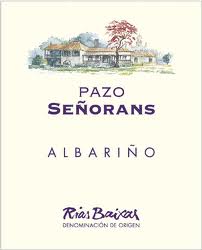
Consumption in Galicia alone has exceeded the supply, making the wine generally expensive. There are some experiments going on with barrel fermentation and ageing, but generally they are made fresh using stainless steel vats. The best producers include like Pazo de Senorans and Agro de Bazan.

In Portugal, the grape is known as Alvarinho, with the best quality coming from Dao and Estremadura, mainly because of the lower crops, as well as in the extreme north of the Vinho Verde region.

It is one of the first white grapes to appear as varietal too in Portugal, but is more often blended with Loureiro, Treixadura and Caino. The best producers include Jose Maria da Fonseca.

The wine is typically light-bodied, with zesty and hints of exotic fruit, showing the aromas and flavors of lemon zest, grapefruit and apple blossom, mineral and when ripe, apricot skin and white peach.

Couvent des Jacobins


The estate was built in the 13th century, and now own by Rose-Noelle Borde, the descendent of the Borde family who had owned the estate for 106 years.

Throughout the years the estate has been renovated but the style of the property was still preserved.

Located in the heart of St-Emilion with 10.7 hectare, all bottling is done at the convent, where the Dominican preachers left behind. The wines made by the preachers were used to be prized by the Court of England.