2011年12月20日 星期二

Ribera del Duero

Unknown prior to early 1980s, this region is now one of Spain’s foremost red wine region, rivaling Rioja. Traversed by the Duero, the river that in Portugal becomes the Douro and the home of port, the broad valley from Valladolid to Aranda de Duero has in fact a tradition of winemaking.
At 850m, the nights are remarkably cool, which is a big drop from the searing heat in the , providing the lively acidity for its wines. The reds are intense in colour, fruit and savour, quite different from Rioja which is just a mere 100km away.
Vega Sicilia is probably the most famous producer here, demonstrating the quality of the wine that can be made in this region for long. The estate was initially planted in the 1860s, with Bordeaux varieties. It’s Unico is only produced in good vintages, aged longer in oak than any other table wine, and sold at 10 years, with the Bordeaux grapes blended with the local Tempranillo.
However, most other producers have been focusing on Tinto Fino, with a little Garnacha and the white Albillo planted. In 1982 there were just 24 bodegas when the DO was created, but in 2005 there were already 215.
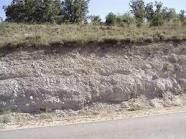
The soil varies greatly even in a single vineyard, but by far the most is limestone in the north. There is a strong tradition of buying grapes, but the top winemakers, like Dominio de Pingus, are cagey about their sources.
Two of the most successful producers are even outside the DO boundaries, with Abadia Retuerta and Mauro. Now many well-established producers from other regions come over to develop this region, and the prospect of Ribera del Duero is truly limitless.
Wine: Tinto Pesquera Millenium Reserva
Region / Country: Ribera del Duero Spain
Vintage: 2002
Grape: 100% Tempranillo
ABV: 13.5%                
Price: HK$698
Tasting Date: 20 December 2011
Wineshark Score: 92

Deep ruby with garnet rims, this Ribera del Duero Tempranillo has a fairly intense and developing aromas of blackberry, black cherry, plum, savory, liquorice, chocolate and smoke. Medium in acidity, the wine has medium tannin which is soft and velvety in texture. Fairly full body, with reasonable intensity flavors of black cherry, plum, prune, smoke, leather and cocoa. A reasonable length accompanies. Overall of very good quality, the nose is particularly complex encompassing a good balance of different aromas. Ready to drink now and has potential for further ageing of another 4-6 years.

2011年12月10日 星期六

Toro

Toro is located at the far west of Castilla y Leon. The growth there is phenomenal, in 1998 there were only 8 bodegas. Just two years later it had 25, and by 2006 it had 40. The local strain of Tempranillo, Tinto de Toro, provides a good wine. Traditionally many bodegas of note in Rioja or Ribera del Duero had been looking at Toro for expansion, but it was only when Vega Sicilia announced their plans to establish a bodega there to produce Pintia then its status was finalized. Other high-profile investors include Alejandro Fernandez and Mariano Garcia. Many others outside Spain also followed suit, with the Lurton brothers of Bordeaux and Bordeaux negociant Mahler Besse.
The key to Toro’s quality is its altitude. At 600-750m the growers can depend on cool nights to ‘fix’ the color and flavor ripened during the torrid summers on the red clay and sandy soils. The average age of the vines is relatively high and most are grown as individual bushvines, spaced as far as 3m apart, with a record low density, due to the low rainfall.
Some of the vines are vinified quickly by carbonic maceration and sold young and juicy. But the great majority is aged in oak, for at least 12 months. The deep crimson, very fruity wine receive so much admiration that Tinto de Toro is now planted in other parts of Spain. Garnacha is also planted, sometimes blended with Tinto de Toro, and there is a little Malvasia and Verdejo for some full-bodied white wines.
Wine: Bodegas San Roman
Region / Country: Toro Spain
Vintage: 2006
Grape: 100% Tinto de Toro
ABV: 14.5%                
Price: HK$338
Tasting Date: 10 December 2011
Wineshark Score: 91

Opaque ruby with purple rims, this Toro wine has a fairly intense and developing nose of blackberry, vanilla, smoke, cream, white pepper, cedar and raspberry. Medium acidity and tannin that is velvety, the wine has a fairly high alcohol level and close to full body, with intense flavors of blackberry, vanilla, strawberry, oak and smoke. Overall of very good quality, the nose and palate are both intense and complex, fully exhibiting the ripeness of the grapes, and with a good balance between the fruit and the new oak used to mature the wine. A good length accompanies the finish and makes it highly enjoyable. Ready to drink now and can be further developed for another 3-5 years.

Wineshark Recipe - 21. Pork Chop with Onion & Mustard

A dish that think not many restaurants make nowadays. Interesting flavors!

Ingredients:
  • Pork chop - 1 lb 4oz
  • Onion finely - 1 lb 4oz
  • Garlic finely - 2 tsp
  • Cooking oil - 4 tbsp
  • Whipping cream - 5oz
  • French mustard - 2 tbsp
  • Parsley finely - 1 tbsp
  • Curry powder - 1 tbsp
  • Salt - 1 1/2 tsp
  • White pepper powder - 1/2 tsp
Wash the pork chop and then use the back of the chopper to hammer the meat to soften it. Season it with salt and white pepper powder.

Mix the cooking oil, French mustard, garlic, onion, whipping cream, and other seasonings together, then coat the pork chop completely. Put into oven for about 15min at 250 degC.

Wineshark Recipe - 20. Chucky Cajun Potato Wedges

Now with my new oven, I am able to make good stuff. This potato is spicy but will be good to enjoy with beer.

Ingredients:
  • Potato - 3lb
  • Olive oil - 2oz
  • Butter - 3oz
  • Ground cumin - 2 tbsp
  • Cajun seasoning - 2 tbsp
  • Garlic finely - 1 tbsp
  • Red chili finely - 2 tsp
  • Black pepper finely - 1 tbsp
  • Oregano - 1/2 tsp
  • Salt - 1 tsp
Wash the potato and cut it into wedges. Put them in boiling water for a while and then take it out to cool and dry.

Then add the olive oil, butter and other spices, mix it well and put in oven for about 30min at 250 degC.

Wineshark Recipe - 19. Leek and Lentil Soup

This one is real good. But you need to have a blender in order to make this soup.

Ingredients:
  • Butter - 1oz
  • Leek sliced - 3oz
  • Celery - 2 sticks
  • Bacon - 2 strips
  • Red lentils - 8oz
  • Chicken stock - 2lb 8oz
  • Whipping cream - 4oz
  • Salt - 1 tsp
  • White pepper powder - 1/4 tsp
  • Parsley finely - 1 tbsp
Heat up the buter and then stir fry the leek, celery and bacon using a small fire for about 5min. Then add the red lentils and chicken stock to cook for a further 20min.

Put everything into a blender to blend to a fine mix, then pour back into the pot, add whipping cream, seasoning and parsley, and cook for a short while.

Wineshark Recipe - 18. Chicken Stock

Nowadays many people will just buy the packaged soup, but it is full of MSG and other additives. Why don't just make your own chicken stock? It's easy to make!

Ingredients:
  • Chicken bone x2
  • Carrot x2
  • Onion x1
  • Celery x 4 sticks
  • Bay leaves x4
  • Black pepper - 2 tbsp
  • Water - 3lb
After washing the chicken put it in hot water, along with the other ingredients. Boil it for about 2 hours and use a sieve or cloth to filter out the clear soup.

2011年12月9日 星期五

Chateau Poujeaux

This chateau is a Cru Bourgeois located in Moulis, one of the two lesser communes in Medoc where no classed growth are found. Chateau Poujeaux and Chasse-Spleen are always perceived as the leaders in this commune. With the history traced back to the 16th century, there were couple of change in hands and the estate is now under the Theil family.
Francois Theil first purchased 1/3 of the original estate I n1921, and his son then brought in the three portions together again. Because of its quality, the estate was awarded a Cru Bourgeois Exceptionnel status in 1932. But because of the legal challenge on the classification, it was annulled in late 2007. And from that point there was also news on the sales of the property.
There are now 52 hectares under vine, with 50% Cabernet Sauvignon, 40% Merlot, 5% Cabernet Franc and 5% Petit Verdot. Average age of the vine is 35 years. Harvest is manual with fermentation under temperature-controlled environment, with maceration up to 28 days. The wine is matured in oak for one year, with 50% new oak each year. Total production per year is 30000 cases, with a second wine La Salle de Poujeaux.
I have recently tasted the 2006 vintage:
Vintage: 2006
Grape: 50% Cabernet Sauvignon, 40% Merlot, 5% Cabernet Franc, 5% Petit Verdot
ABV: 13%                    
Price: HK$274
Tasting Date: 7 December 2011
Official website: www.chateaupoujeaux.com
Wineshark Score: 89

Deep ruby in colour, this Bordeaux Cru Bourgeois Exceptionnel has a reasonably intense and developing nose of blackcurrant, tobacco, savory, black cherry, liquorice, smoke and earth. Fairly high in acidity and tannin, the wine is of fairly full body with intense flavors of blackcurrant, blackberry, black cherry, liquorice, cream, tobacco and mint. Overall of good quality, the palate is quite juicy and showing interesting flavors of fair complexity and reasonable length. Ready to drink now but can further develop for another 8-10 years.