2014年10月1日 星期三

Wineshark Cooking Class - 20. Cheeseburger (pork version)

Ingredients (for 2):
  • White bread (crusts removed) - 7g
  • Whole milk - 1.5 tsp
  • Minced pork - 250g
  • Eggs - 1/2
  • Salt - 1/4 tsp
  • Ground white pepper - 1 pinch
  • Burger buns - 2
  • Olive oil - 2 tbsp
  • Cheddar cheese slices - 2


Procedures:

1. Tear the bread into pieces and soak in the milk for 5 minutes.

2. Combine the meat, eggs, soaked bread, salt and pepper in a large bowl.

3. Stir together with your hands until you have an even mixture.

4. Shape into burgers weighing about 135g each.

5. Cook the burgers with the oil in a frying pan over a medium heat.

6. Cook for 8-10 minutes.

7. Cut the buns in half and toast them lightly in a dry pan or under the grill.

8. Top each burger with a slice of cheese.

9. Using a spatula, lift each burger onto a bun.

10. Sandwich with the top half of the bun.

11. Add your choice of toppings.

Wineshark Cooking Class 19. - Caesar Salad

Ingredients (for 2):
  • Garlic cloves - 1/2
  • Anchovy fillets - 2
  • Egg yolks - 1
  • Sherry vinegar - 2 tsp
  • Sunflower oil - 3 tbsp plus 1 tsp
  • Parmesan cheese finely grated - 20 g
  • Romaine lettuce - 1 small head
  • Croutons - 30g
  • Parmesan cheese finely grated - 20g


Procedures:

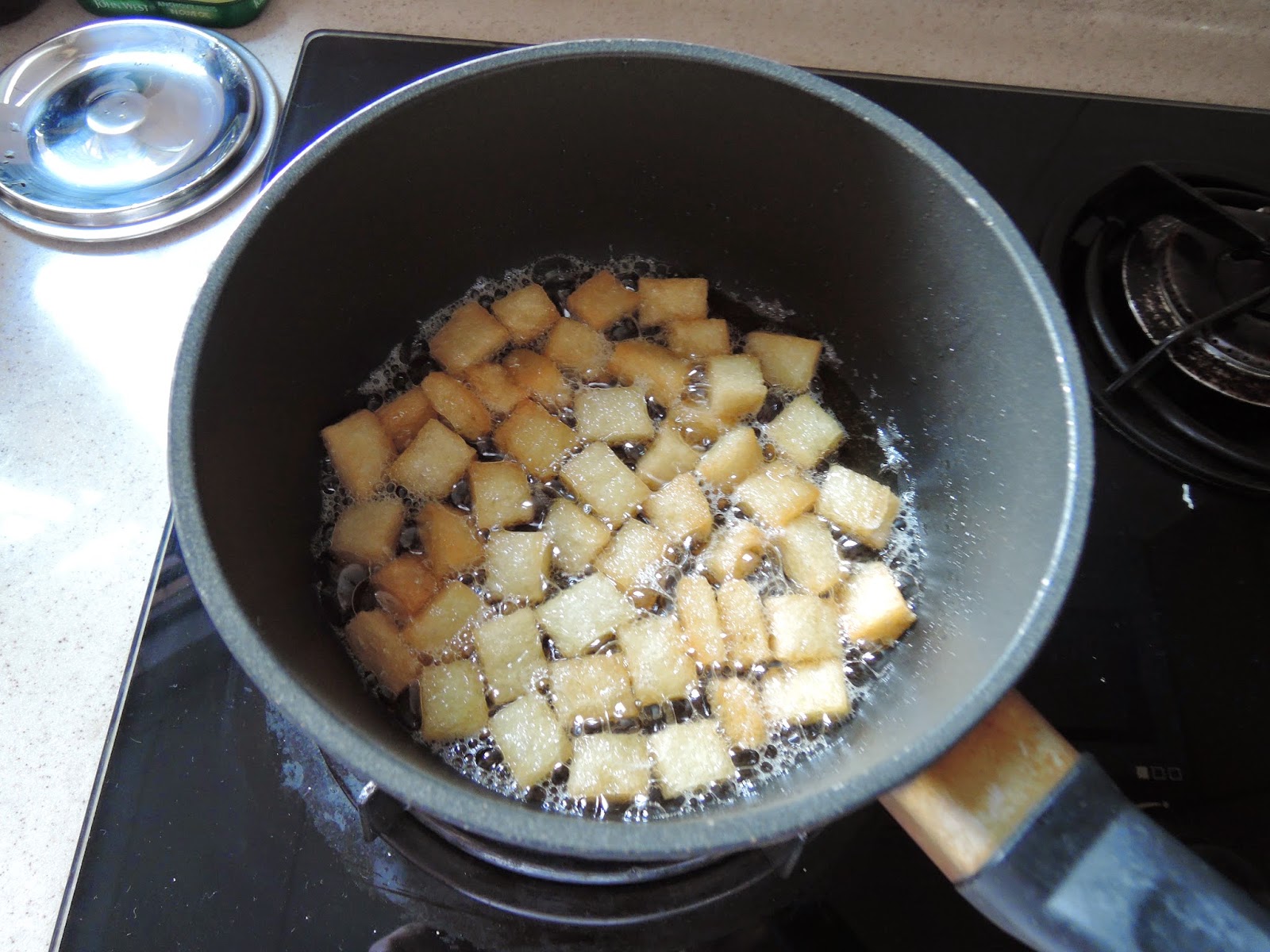
1. Cut the bread into 1.5cm squares.

2. Put a deep pan over a medium heat, then add the oil.

3. When the oil is hot, fry in the cubes in batches of 6-8 minutes until golden brown and crisp.

4. Lift the croutons out of the oil with a slotted spoon.

5. Transfer onto kitchen paper, and leave to drain.

6. Put the garlic, anchovies and egg yolks into a tall jug or beaker.

7. Process with a hand-held blender until smooth.

8. Very gradually pour in the sunflower oil while blending to make a smooth, thickened sauce that looks similar to mayonnaise. Blend in the vinegar.

9. Stir in the grated Parmesan.
10. Chop the lettuce into 4cm pieces.

11. Put the lettuce into a large mixing bowl, add the Caesar dressing and toss well to coat the leaves.

12. Pile the salad onto a serving dish.

13. Sprinkle with grated Parmesan.

14. Scatter with croutons and serve.

2014年9月30日 星期二

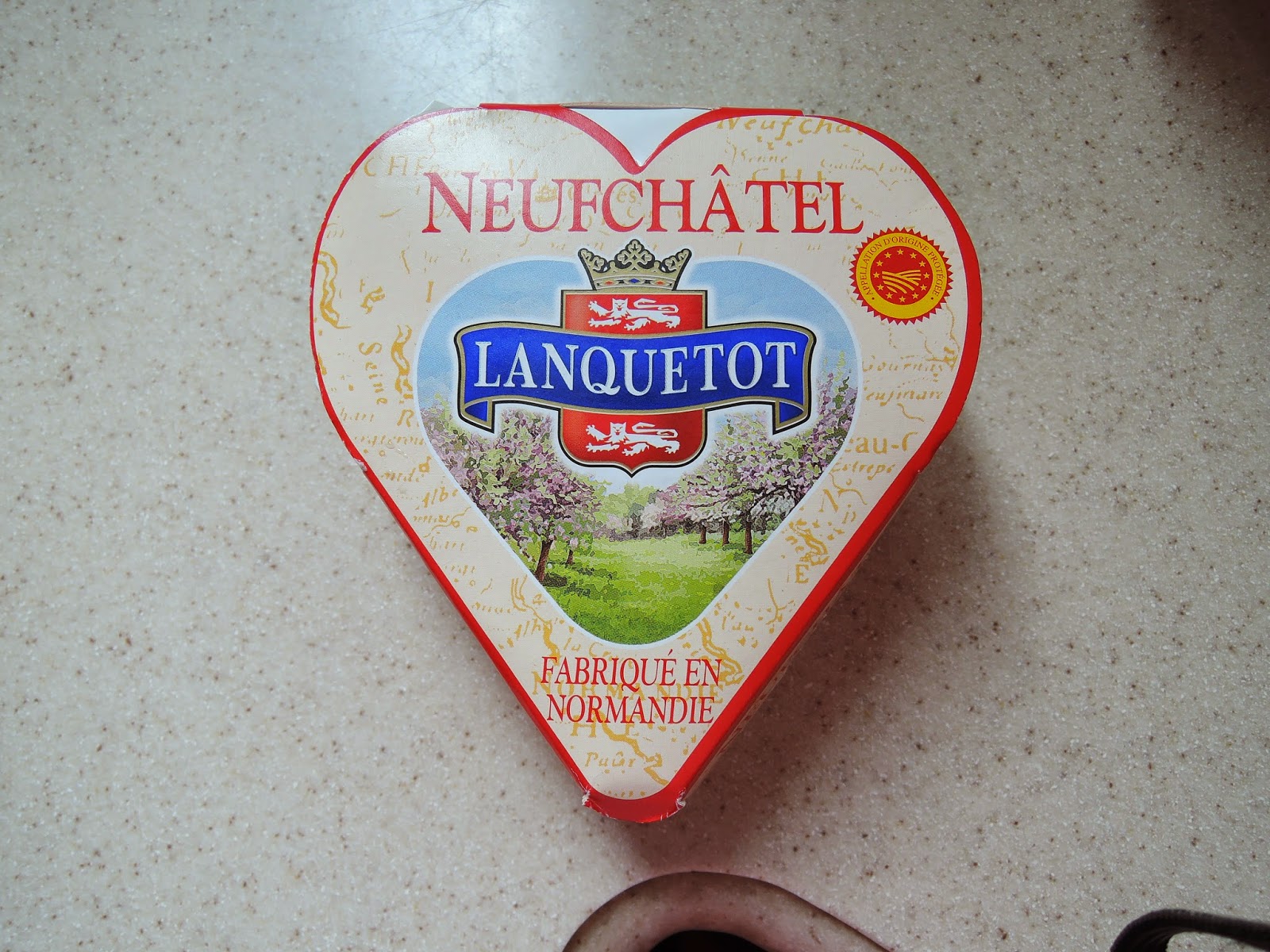
Neufchatel


Neufchatel is a soft cheese with white mold made from cow’s milk. It is first officially appeared in the Abbey Saint-Amand in Rouen in 1543. According to legends, during the Hundred Years’ War young girls gave the cheese to their English admirers as tokens of their affection.

Made from raw or pasteurized milk to which rennet is added, and sometimes also lactobacilli, the cheese is put in linen bags and left to drain for several hours under slight pressure. The mass is injected with chopped bloom-covered cheese and stirred until the mass is homogeneous. It is placed on wooden slats in cellars and left to mature for 10 to 14 days.

It is available in several sizes and shapes, with carre (square), bondon (cylinder), and briquette (brick) weighing 3.5 oz, double-bondon and small heart weighing 7 oz, as well as larger ones of 21oz. The rind is a white bloom, with a soft mass, creamy and slightly grainy. Mature Neufchatel has a slightly yellow mass with red spots on the rind, smelling and tasting of mushrooms. Young Neufchatel is strong and acidic, with mature ones having intense, slightly piquant flavor.

Neufchatel can be eaten fresh or mature, tasting best between August and November. Cider goes extremely well with mature Neufchatel, along with Cru Beaujolais or mature St-Emilion.

2014年9月29日 星期一

Livarot


Livarot is a soft cheese with a washed rind made from cow’s milk. The cheese was mentioned in some very old documents, with record as early as 1708. It was also known as poor man’s meat because of its flavor and nutritional values.

The curds are cut and kneaded, turned several times after shaping, then drained and sprinkled with coarse salt. It is then washed and turned three times a week during its 4-week ripening period. The rind is brushed with a red-yellow annatto tincture made from the seeds of achiote tree. It is bound with five thin strips of paper to give its distinctive shape, known as ‘the Colonel’.

Livarot is a flat cylindrical cheese with several sizes, usually 5 inches in diameter and 2 inches thick, weighing 12-18 oz. Also available as three-quarter, half and one-quarter Livarot, it has smooth, shiny, orange rind that gradually darkens. The yellow elastic mass has tiny holes. Spicy aroma, it has a strongly spicy, dry and slightly acidic aromatic flavor.

Delicious served with apples and pears, young Livarot goes well with strong white wines such as Chardonnays and well-matured red Burgundy, Gewurztraminer, or strong Pinot Gris. Mature cheese goes well with expressive white wines like Gewurztraminer and also Vendanges Tardives, a strong cider, or Calvados.

Camembert de Normandie


Camembert de Normandie is a soft cheese with a white mold rind made from raw cow’s milk. It has been around for little over 200 years, with the inventor believed to be Marie Harel from the village of Camembert in Normandy. In 1880 an engineer named Ridel invented the characteristic wooden box to hold the cheese for travel without damage. The design became famous and was copied in other soft cheese. Surprisingly, this cheese only received its AOC status in 1983.

Rennet is added to milk to make it separate, with five ladles of curds poured into molds at intervals of one hour. The cheese made this way can be called Camembert de Normandie au lait cru, moule a la louche. Dry salt is then added and left to mature at room temperature, with a tiny amount of mold to help form its typical white rind. The cheese is turned over 48 hours and must be at least 21 days old before sale. It takes about 5 pints of milk to make one Camembert.

It has a small cylindrical shape, measuring 4-5 inch in diameter and 1 inch thick, weighing about 9 oz. There is soft red marks on the fine, grooved, white-bloomed rind, with the mass being white to light yellow, soft but not runny. The heart of fresh Camembert is crumbly and flaky, but when ripe it is soft, elastic and smooth. Fresh Camembert tastes slightly acidic, but when ripe it is a little fruity.

Very ripe Camembert goes well with hearty cider or mature Calvados. Young Camembert is good with fine red wines with fruity, ripe character and understated tannin, like those from Cotes de Beaune or mature St-Emilion.

2014年9月27日 星期六

Wineshark Cooking Class - 18. Chicken Leg Country Style

Ingredients:
  • Chicken leg - 4 pcs
  • Salt - 1 tsp
  • Plain flour - 1/2 tbsp
  • Brandy - 2 tbsp
  • Dry white wine - 6 oz
  • Paprika ground - 2 tsp
  • Whipping cream - 3 oz
  • Parmesan cheese - 2 oz
  • Milk - 6 oz
  • Parmesan cheese - 1 oz
  • Bread crumbs - 1/2 tbsp
  • French mustard - 2 tsp
Procedures:

1. Marinate the chicken leg with salt for about 30 minutes.

2. Coat with flour and panfry till golden.

3. Remove the excess oil, then add brandy, white wine, paprika, milk and cheese to cook for about 10 minutes.

4. Put the chicken leg in oven tray and coat with French mustard.

5. Mix bread crumbs with cheese, then sprinkle on top of the chicken leg and put in oven till turning to golden brown.

Wineshark Cooking Class - 17. Russian Borscht

Ingredients:
  • Stock - 2 lb 8 oz
  • Celery - 8 oz
  • Carrot - 8 oz
  • Onion - 8 oz
  • White cabbage - 8 oz
  • Cooking oil - 2 tsp
  • Green pepper - 1/2 oz
  • Red chili - 2
  • Beet root - 2 oz
  • Bay leaf - 1
  • Garlic finely - 1/2 tsp
  • Tomato - 2 oz
  • Tomato paste - 2 oz
  • Maggi sauce - dashes
  • Tomato juice - 4 oz
  • Tabasco - dashes
  • Salt - 1 tsp
  • White thickening - 1 oz
Procedures:

1. Cut the vegetables into stripes, then sautee till soften.

2. Add the stock and other ingredients to cook for about one hour.

3. Season and then add white thickening with water.